ThriveBetter Living Book / refer
Physiotherapy-led · Optimal Handed Care · UK

Reduce waiting lists. Right-size care. Release workforce capacity.

Clinically governed moving & handling assessment and implementation for Local Authorities and care providers—balancing independence, dignity, safety and sustainable capacity.

01Individual assessment
02Proportionate staffing
03Reablement first
Assessment view
Digital twin / concept
01 · PERSON + PARTICIPATION Start with the person's active ability.

Assess weight bearing, trunk and head control, reach, grip, pain, fatigue, cognition, communication, consent and the outcome the person wants before selecting equipment.

Indicative clinical capacity

A practical starting capacity, scaled around each contract.

Planning estimates for a standard clinical week. Actual availability depends on referral complexity, travel, reporting requirements and any agreed multi-site delivery model.

Local authoritiesCare providersCare homesIndividuals
Typical week Up to0

assessment slots (indicative)

Typical month Up to0

assessment slots (indicative)

Available now 0

bookable service pathways

Person using a wheelchair in a community care setting
Photo: Annabel Podevyn / Unsplash
Clinical lensIndependence before dependency.
A different kind of moving & handling service

Not just safer handling. Better care design.

Risk reduction matters, but the assessment should also ask whether the current technique, equipment or care package is limiting independence unnecessarily.

01
Assess the current ability

What has changed? What can the person initiate, control or relearn?

02
Redesign the transfer

Technique, equipment, positioning and environment are considered together.

03
Optimise the care package

Staffing follows the assessed need—not habit, assumption or historical practice.

See how single-handed care is assessed
Referral priority

Choose the safest route, before choosing an appointment.

This interactive guide helps referrers describe urgency. It does not replace emergency services, NHS pathways or the relevant local authority's safeguarding duties.

Equipment explorer

Equipment is selected to solve a transfer problem—not because it is simply available.

Explore a curated set of equipment commonly encountered in UK practice. It is not an exhaustive catalogue or a prescription: selection must match the person, task, handling plan, current instructions, compatibility, environment and staff competence.

Browse the complete Etac UK catalogue
Person · Task · Equipment · Environment

Build a compatible equipment system

Choose equipment around the person and task. Record the setup, assistance, checks and contingency.

Explore equipment considerations
UK practice framework MHOR · PUWER · LOLERHSE moving and handling Bed-system safetyMHRA bed-rail guidance Governance sourcesCQC · HCPC · NICE · UK GDPR

Examples are for recognition and discussion. The current manufacturer instructions, local policy, maintenance status and a person-specific assessment govern use.

Assessed support progression

From two-person support to an assessed one-person outcome.

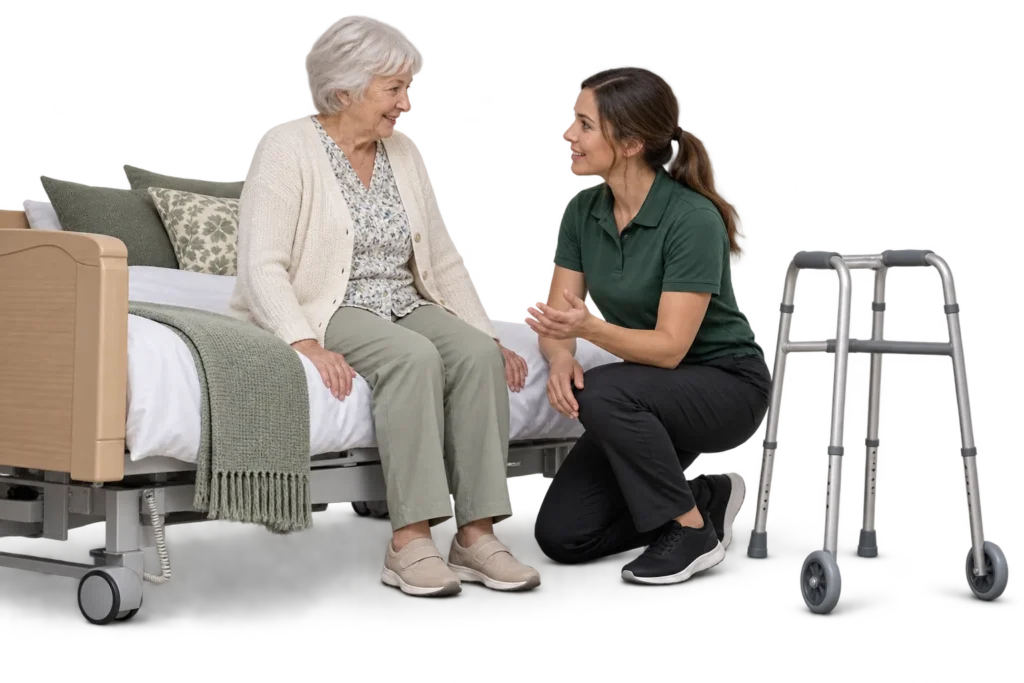
Scroll through an illustrative rehabilitation review. The person begins with two staff supporting the current transfer. Active ability, standing and walking are then trialled before one-person support is considered. Staffing changes only when the exact task is safe, reliable, documented and supported by a contingency plan.

01 · BASELINEObserve the existing two-person support
02 · POTENTIALIdentify the person's active contribution
03 · TRIALPractise standing and frame setup
04 · PROGRESSTrial walking with reduced assistance
05 · CONFIRMRecord the assessed support level
ONE-PERSON OUTCOMEOnly after a successful trialSpecify the walking aid, staff position, cues, assistance, distance, stop points and what to do if ability changes.
REHABILITATION PATHWAYBuild function before reducing supportWhere further gains are realistic, offer a goal-led Thrive programme or support referral to the appropriate local therapy service.
ASSESSED STAFFING Two-person baseline Current support is observed before any reduction is trialled.
BASELINE REVIEW 2-PERSON BASELINE ASSESSED HANDLE HEIGHT FRONT WHEELS
BASELINE Observe current two-person support

Record what each member of staff does, how the person participates and why the existing level of assistance is currently required.

For commissioners & providers

A report that can actually be used at the point of care.

The value is not the visit alone. It is a clear, auditable recommendation that translates clinical findings into a workable care plan.

Discuss a case
01Functional pictureMobility, transfers, participation, cognition, pain, falls and rehabilitation potential.
02Handling planTechnique, equipment, sling and attachment detail, staffing and environmental controls.
03Commissioning recommendationCurrent support need, optimisation opportunities, review triggers and next steps.
New referral-support pathway

A better wheelchair referral starts with better functional evidence.

We can document mobility, transfers, observable sitting presentation, daily outcomes and environmental constraints—then help the authorised referrer use the correct local wheelchair-service pathway.

Clear clinical boundary Thrive Better Living supports assessment evidence and referral; the local wheelchair service retains eligibility, specialist assessment and prescription.
01
ObserveFunction and daily outcomes

Mobility, transfers, sitting tolerance, participation and care support.

02
MeasureEnvironment and access

Doorways, turning space, storage, transfer approach and transport.

03
ReferCorrect local pathway

A concise evidence pack for the appropriate professional or service.

How it works

From referral to a defensible care plan.

01
Referral triage

Clarify the problem, urgency, current support and decision required.

02
Person-centred assessment

Observe relevant tasks in the real environment and assess function, risk and rehabilitation potential.

03
Optimised plan

Define technique, equipment, staffing, controls and practical care instructions.

04
Review & handover

Support implementation and identify triggers for reassessment when needs change.

Practice framework

Clinical reasoning backed by safe systems of work.

01Individual handling plan

Who, how, what equipment and how many handlers.

02Equipment compatibility

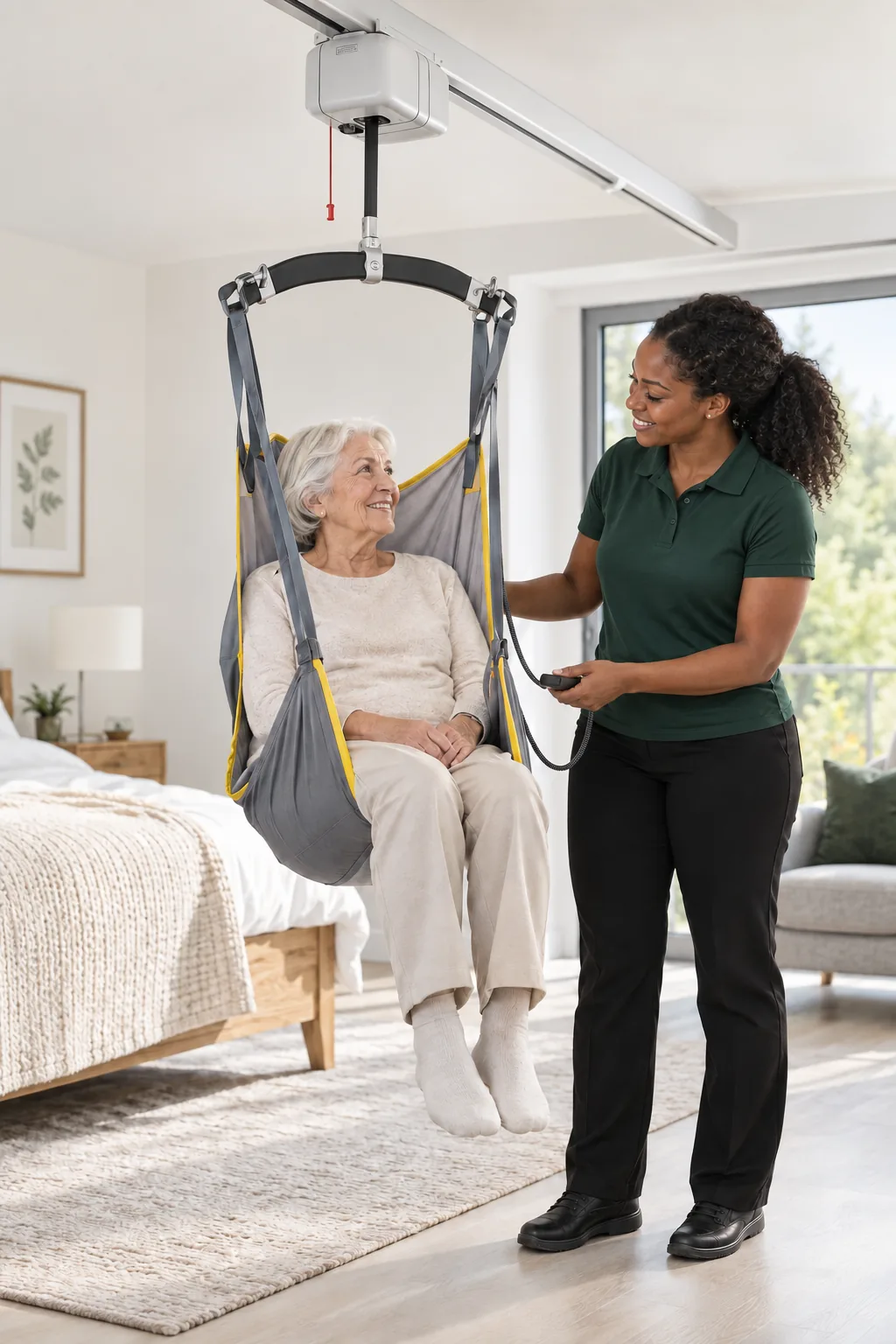
Hoist, sling and attachment combination must be appropriate.

03LOLER / PUWER context

Work equipment, examination, maintenance and safe use considered where applicable.

04Competency & review

Technique must be deliverable by trained staff and updated when needs change.

The site does not label equipment as universally “UK approved”. Suitability depends on the specific device, intended use, manufacturer instructions, compatibility, maintenance and the individual risk assessment.

Complex case? Care package not working?

Bring the person, the transfer and the care model into the same assessment.

Commission specialist moving & handling input for complex community cases, single-handed-care review, equipment recommendations, reablement and care-package optimisation.